Think a big paycheck equals wealth? Think again. From Warren Buffett to small-business owners, the richest people focus on assets and savings, not just income. Learn how to shift your mindset and build lasting financial freedom.
Wealth vs. Income vs. Cash Flow
Confusing these three concepts traps many in a cycle of earning without building wealth. Here’s what they mean and why they matter in 2025:
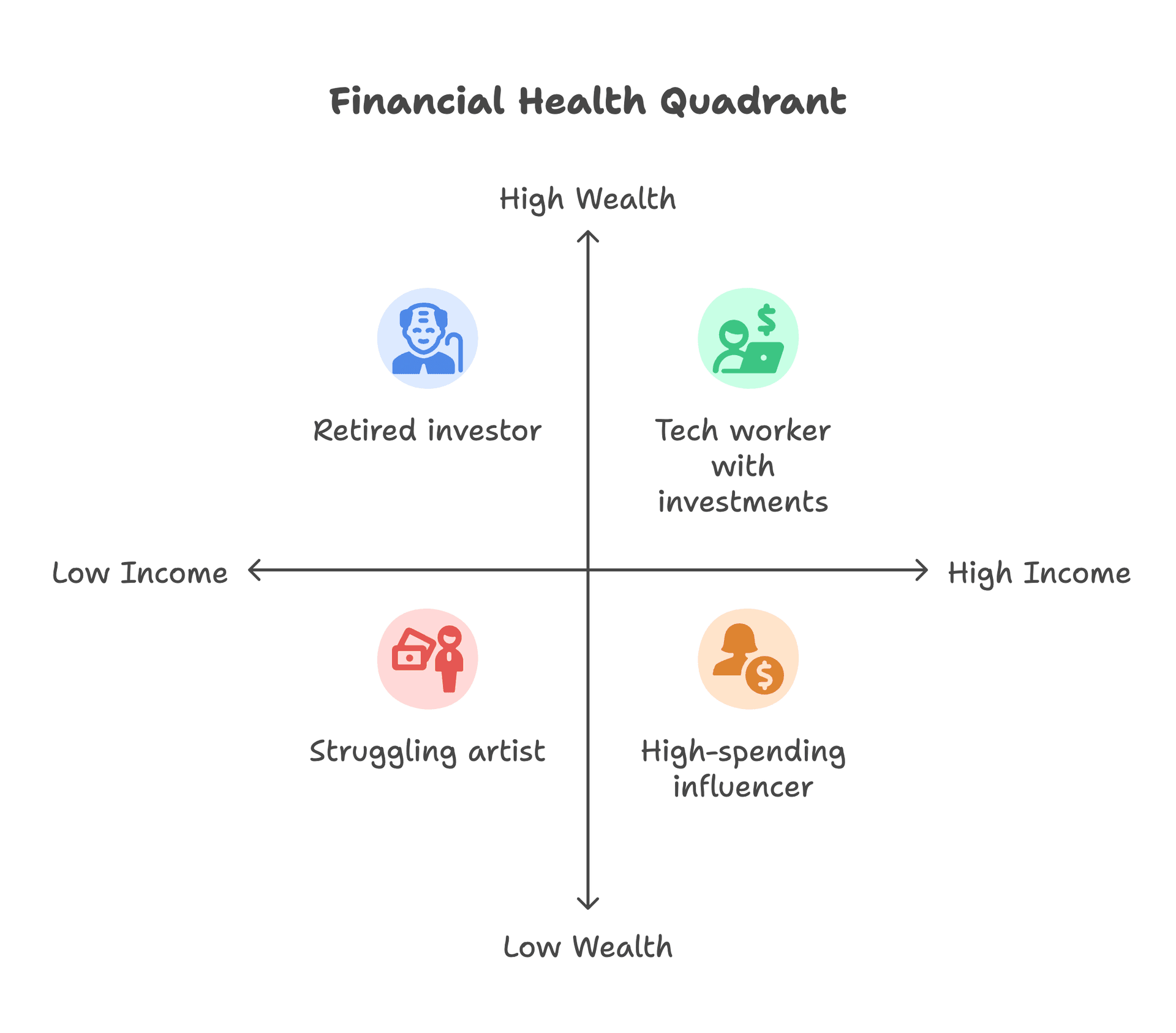
Income
Income is money you earn—salary, side hustle, or dividends. It’s immediate but doesn’t guarantee wealth if spent recklessly.
Example: In 2025, a tech worker earns $150,000 but spends $160,000 on a luxury car and lifestyle, leaving no savings. High earners like influencers often face bankruptcy post-career due to overspending.
Wealth
Wealth is your net worth: assets (what you own) minus liabilities (what you owe). It’s built by owning appreciating assets like stocks or property.
Example: A 2025 retiree with $500,000 in investments and a paid-off home has high net worth, even with modest past income, unlike a high earner with heavy debt.
Cash Flow
Cash flow is monthly income minus expenses. Positive cash flow (spending less than you earn) fuels wealth-building.
Example: A 2025 teacher earning $60,000 saves $12,000 yearly by living frugally, creating positive cash flow, while a lawyer earning $200,000 with high expenses has negative cash flow.
The Wealth Equation
Wealth grows through a simple formula: Wealth = (Income - Expenses) × Time × Investment Returns. Here’s how each factor works in 2025:
Savings Rate (Income - Expenses)
Your savings rate—how much you keep after expenses—drives wealth faster than income alone.
Example: In 2025, Emma earns $60,000, spends $45,000, and saves $15,000 (25% savings rate). Liam earns $120,000 but spends $108,000, saving $12,000 (10%). Emma builds wealth faster despite lower income.
Time
Time amplifies wealth through compound interest. Starting early is key.
Example: In 2025, a 25-year-old invests $200/month at 7% returns. By 2065, it’s worth ~$278,000, while a 35-year-old doing the same reaches only ~$242,000.
Investment Returns
Higher returns from stocks (6-8% in 2025) versus savings accounts (3-4%) accelerate wealth growth.
Example: A 2025 investor puts $10,000 in an S&P 500 ETF (7% return) versus a savings account (3%). After 20 years, the ETF grows to ~$38,700, while the savings account reaches only ~$18,000.
Asset Ownership: The True Wealth Builder
Wealth comes from owning assets that grow or generate income, not from earning a high salary. Here’s a 2025 breakdown:
Types of Assets
Assets put money in your pocket. Focus on these:
- Stocks/ETFs: Ownership in companies, like a 2025 S&P 500 ETF yielding 6-8%.
- Real Estate: Rental properties generating monthly income.
- Businesses: Equity in a startup or small business with growth potential.
Example: In 2025, a small-business owner invests profits into a rental property, earning $1,500/month, while a high earner buys a luxury car that depreciates.
Assets vs. Liabilities
Assets generate income or appreciate; liabilities cost money. A home you live in is often a liability due to ongoing costs, unlike a rental property.
Example: In 2025, buying a $50,000 car (liability) drains savings, while a $50,000 rental property (asset) generates $500/month in net income.
How the Wealthy Think About Money
The rich adopt mindsets that prioritize long-term wealth over short-term spending. Here’s how they think in 2025:
Focus on Net Worth
Wealthy people track net worth, not income, as the true measure of success.
Example: In 2025, a tech CEO with a modest salary grows wealth through stock ownership, unlike a high-earning influencer with no savings.
Buy Assets, Not Liabilities
The wealthy invest extra cash in income-generating assets, avoiding depreciating purchases.
Example: A 2025 entrepreneur uses a bonus to buy an ETF, while others spend on luxury goods that lose value.
Strategic Debt
Good debt (e.g., mortgages for rentals) builds wealth; bad debt (e.g., credit card debt) erodes it.
Example: In 2025, a real estate investor uses a low-rate mortgage to buy a rental property, while others rack up high-interest credit card debt for vacations.
The Power of Equity
Equity—ownership in appreciating assets—is the cornerstone of wealth. Unlike salaries, equity grows exponentially.
- Business Equity: Starting a business, like a 2025 e-commerce store, can yield high returns.
- Stock Equity: Early employees at tech startups in 2025 gain wealth through stock options.
- Real Estate Equity: Property ownership grows wealth through appreciation and rent.
Example: A 2025 startup employee’s stock options soar after a company IPO, far outpacing their salary’s impact.
Capital vs. Labor Income
Wealth grows by shifting from labor (time-bound) to capital (scalable) income.
Labor Income
Salaries are limited by hours worked and taxed heavily.
Example: A 2025 consultant earns $100,000 but stops earning when not working.
Capital Income
Dividends, rent, or capital gains grow without time limits and often face lower taxes.
Example: In 2025, a landlord earns $2,000/month in rent, generating income even while vacationing.
The Millionaire Next Door
Most millionaires aren’t flashy—they live frugally and invest wisely. Here’s how they do it in 2025:
- Live Below Means: Driving used cars, living in modest homes.
- Invest Consistently: Saving 15-20% of income for investments like ETFs.
- Own Businesses: Running small, profitable ventures like local services.
Example: A 2025 small-business owner lives modestly, invests 20% of income in index funds, and builds a million-dollar net worth by 50.
Your Wealth-Building Plan
Start building wealth with these steps:
- Track net worth (assets minus liabilities).
- Save 15-20% of income.
- Invest in assets like index funds or rentals.
- Develop side income (e.g., freelancing in 2025).
- Learn about investing and money management.
Key Takeaways
- Wealth is net worth, not income.
- Save aggressively to fuel investments.
- Assets (stocks, rentals) build wealth; liabilities (cars, debt) drain it.
- Equity in businesses or stocks drives exponential growth.
- Live frugally, invest consistently for long-term success.
Now that you know what builds wealth, explore how leverage can accelerate—or derail—your financial journey in the next chapter.